by Indra Sinha
Laccho sits in the door of her house, cradling a garment that belonged to her daughter. She mumbles but in what language no one can tell. Sometimes she’ll sing, give a little laugh. Mostly, she cries. ‘She’s been this way for years,’ says a neighbour. ‘All day long sitting holding that cloth, talking to God or whoever will listen.’ Hearing voices, Laccho turns and gives us a toothless and unexpectedly sweet smile.
To look at her you would think she was in her eighties, not her forties. Laccho was born in 1958. At sixteen she was married to Narayan, a hotel waiter. Laccho earned a few rupees rolling leaf cigarettes but the couple were always hungry. Having no money to buy a hut, they built a shack of planks near the new American factory that had opened in Bhopal to make ‘medicine for the
fields’. They soon grew used to the odour of boiled cabbage that hung about the place. Neither they nor their neighbours knew what it was, but all noticed that when the stench from the factory was strong their eyes would water and they’d have trouble breathing. ‘Laccho never knew much joy,’ says her husband. ‘She gave birth to a child, but it died before its first birthday. Our second baby also died after just a few months.’
Across the way in Union Carbide’s factory, workers were falling sick. They’d vomit, feel giddy. One died when phosgene splashed him. ‘Our third child too died in weeks,’ says Narayan. "Laccho was in despair. The fourth lived a few months, but like the others it grew sick and left us. At that point I think my wife wanted to end her life, but I said, be patient, trust God and pray for a healthy child.’ In 1982, Laccho had a baby girl. To her parents’ joy she survived and was two years old on the night of December 2nd, 1984.
THE NIGHT OF THE UNION CARBIDE
disaster in Bhopal lives in people’s memory as screams, panic, lamps reduced to pinpoints by
clouds of burning, stinging gas, thousands of choking figures stumbling through the dark
with urine and faeces running down their legs, people dying in the most horrible ways. Dawn
found corpses tangled in piles in the streets. ‘On that night four of us were running,’ says Narayan. ‘Laccho, our daughter, me and fate – all fled together.’ Somewhere along the way, fate abandoned them. Laccho, pregnant, collapsed in the crush. The gases caught up. By the time their second daughter was born Laccho and Narayan were too ill to work. The little family slid towards starvation. Union Carbide was worth billions, but resisted paying compensation. It threatened to wreck any case brought against it by calling every one of the people its gases had injured to the witness stand. There were 568,000 of them. India’s leaders settled for a pittance that made Carbide’s share price jump. Most survivors got less than $500 compensation to last the rest of their lives. Over the years it comes to 4p a day. Narayan and Laccho were destitute. When their two little girls cried from hunger, Laccho, like other mothers, filled their tummies with water from the well. Only years later did those living near the factory learn that their water
was poisoned by chemicals leaking from the Carbide factory. Company bosses had known
of the danger since 1989 but, unforgivably, kept silent and issued no warnings. Union
Carbide left Bhopal without bothering to clean he factory. It remains full of lethal chemicals.
In areas where the water is poisoned, children re born malformed and brain damaged. No
compensation has been offered, no one has been prosecuted, Union Carbide and its 100% owner
Dow Chemical, say it’s not their responsibility.
‘LACCHO STRAYS IN THE ALLEYS,’ says her husband. ‘Often improperly dressed. Some make fun of her, but most feel pity. So many here have lost their wits, living beings who are no longer aware of their own existence.’ A 1985 study by the National Institute of Mental Health and Neuro Sciences found that at least half of those exposed to Union Carbide’s gases suffer from mental health problems, yet they get no help or support. The government hospitals in Bhopal between them muster not a single full-time psychiatrist. Meanwhile birth defects, brain damage, cancers, TB, asthma and menstrual problems ravage the survivors. More than 20,000 have died since the disaster. In 1994, a man from Bhopal visited Britain bearing a plea for help. Despairing of getting proper medical treatment from the authorities (or the company which still withholds medical studies on the effects of the leaked gases on the grounds that the information is a ‘trade secret’), the survivors wanted to start their own free clinic. We ran an appeal and thanks to generous British newspaper readers, the dream was realised. Today, the Sambhavna Clinic offers a blend of first-class modern medicine, Indian herbal treatment, yoga and massage and has given free care to about 30,000 people. Consulations, medicines, treatments and
therapies are all absolutely free. Sambhavna is the only medical facility in Bhopal with a full
time psychiatrist and staff trained in mental care. It is the only place where people affected
by water poisoning, and survivors’ children can get free treatment and where the poorest are
welcomed with respect. Results are excellent. One old man told doctors, ‘Your medicine works better because it is given with love.’ Amen to that. In the same spirit, we ask you
please to support this good work as generously
as you can.
An appeal by Indra Sinha,
author of Animal’s People,
shortlisted for the 2007 Man Booker Prize
the survivor’s poem
aim a blowtorch at my eyes
pour acid down my throat
strip the tissue from my lungs
drown me in my own blood
choke my baby to death in front
of me, force me to watch
her struggles as she dies –
cripple my children, let pain
be their daily and only playmate –
spare me nothing
ruin my health so i can no longer
work or feed my family –
watch us starve – see my children
drinking water at night
to fill their hungry bellies
then poison our drinking water
never warn us of the danger
cause monsters to be born among us
make us curse god
stunt our living children’s growth
say it's nothing to do with you
don’t ever say sorry
for twenty three years ignore our cries,
teach me that my rage is
as useless as my tears
prove to me beyond all doubt
there’s no justice in this world
for you are a big american corporation
and I am a woman of bhopal


Subscribe To


 Posts
Comments
Posts
Comments
World March for Peace and Non-violence
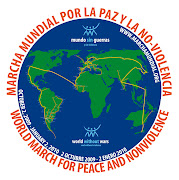
The World March will begin in New Zealand on October 2, 2009, the anniversary of Gandhi’s birth, declared the “International Day of Non-Violence” by the United Nations. It will conclude in the Andes Mountains (Punta de Vacas, Aconcagua, Argentina) on January 2, 2010. The March will last 90 days, three long months of travel. It will pass through all climates and seasons, from the hot summer of the tropics and the deserts, to the winter of Siberia. The stages will be the longest American and Asian, both almost a month. A permanent base of a hundred people of different nationalities will complete the journey. http://www.worldmarch.info
6 billion others

About Me

- filiz
- just another human being, sometimes seeking, sometimes still, sometimes confused, sometimes peaceful, wondering what life is all about...breathing and loving and expanding...

No comments:
Post a Comment